
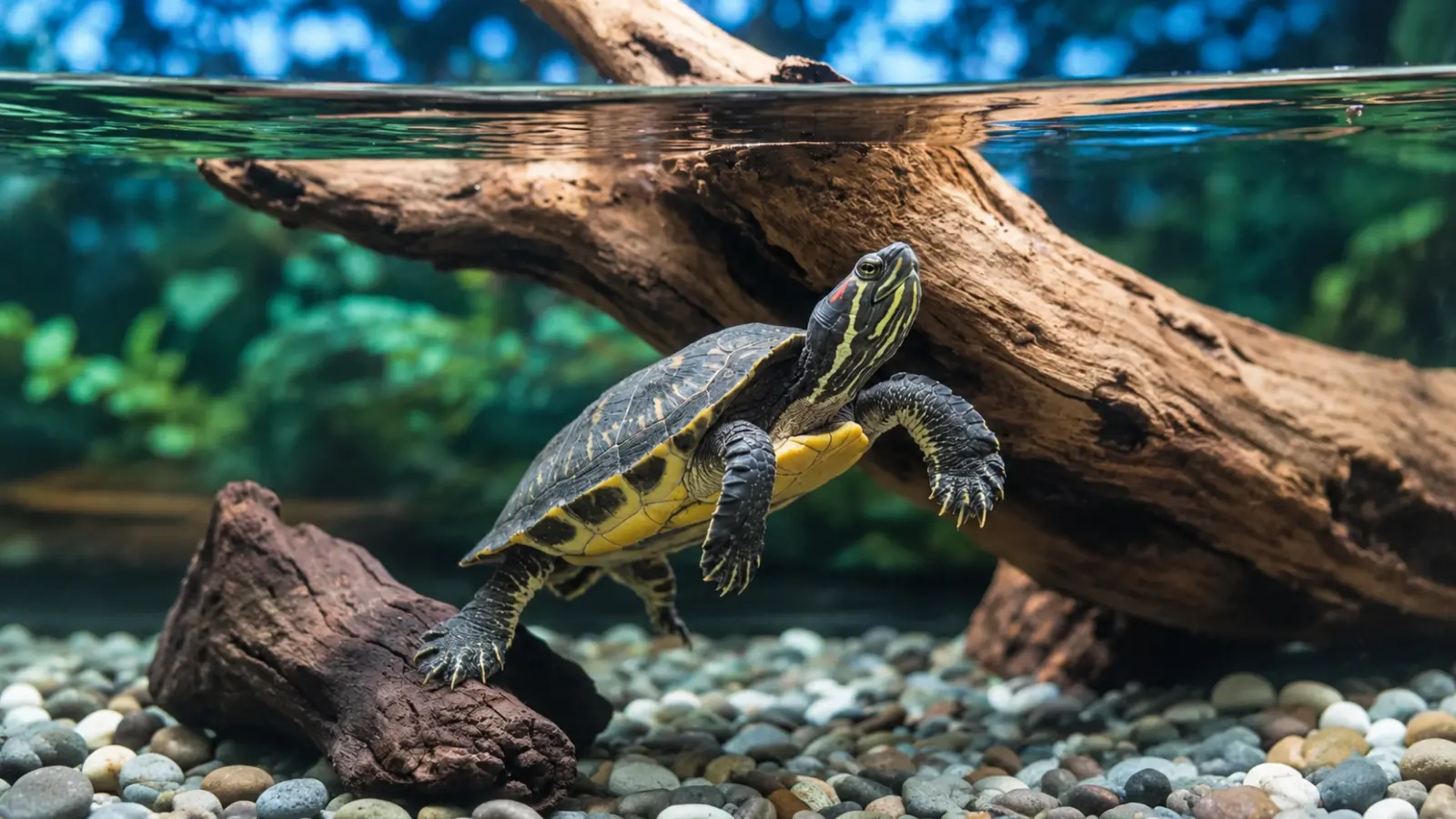
Learning how to care for a pet turtle starts with providing the right environment for its species. Common aquatic turtles need a spacious, well-filtered habitat, clean water, a dry basking area, appropriate heat and UVB lighting, and a balanced diet. They also need regular observation, proper hygiene, and access to a veterinarian experienced with reptiles.
Turtle care can be more demanding than new owners expect. A small hatchling may eventually require a large aquarium, specialized equipment, and decades of attention. Different species also have very different needs: aquatic turtles, box turtles, and tortoises cannot be cared for using the same habitat or feeding routine. The recommendations in this guide focus primarily on common aquatic and semi-aquatic pet turtles, including red-eared sliders.
This guide explains how to prepare a suitable turtle habitat, manage basking temperatures and UVB lighting, maintain water quality, and provide species-appropriate nutrition. You’ll also learn how to reduce Salmonella risks, recognize potential health problems, and prepare your home before bringing a turtle into your care.
Identify the Species Before Following Advice
“Turtle” is not enough information to plan safe care. Pet turtles can be fully aquatic, semi-aquatic, or largely land-dwelling, and species differ in adult size, water depth, basking needs, diet, temperature, and lifespan. Confirm the species with purchase records, a reptile veterinarian, or a knowledgeable rescue or breeder before buying equipment.
Turtle and tortoise are not synonyms in care instructions. Tortoises live on land and need a dry, species-appropriate enclosure, not a tank of water. Box turtles are land-dwelling too, even though they are called turtles. The advice in this guide applies to common aquatic and semi-aquatic pet turtles, such as red-eared sliders and close relatives, and the reference numbers below are written for that group only.
Understand the Commitment and Source Responsibly
Many common pet turtles can live 40 years or more with good care, and a young animal does not show its adult size, space needs, or equipment costs. Before bringing one home, picture the adult: where the full-size habitat will fit, who maintains the filter and lamps, who covers travel, and whether a reptile veterinarian practices near you.
Buy legally and from a source that can tell you the species. A federal rule bans the sale and distribution of turtles with shells shorter than 4 inches as pets because of Salmonella illness, yet small turtles still turn up online, at flea markets, and at roadside stands. If a seller offers one, walk away. Do not take a wild turtle home either. Some states prohibit keeping native turtles as pets, and removing adults can harm local populations, so check your state’s rules.
Never release a pet turtle outdoors when care becomes too much. A released turtle can spread disease to wildlife, compete with native turtles, and may be breaking the law where you live. Contact a reptile rescue, animal shelter, or pet store about safe rehoming instead.
Build a Habitat, Not a Small Tank
A turtle habitat is mostly water, plus a dry platform and secure walls, and it has to hold up to a growing animal. A widely used rule of thumb, repeated in veterinary care sheets, is at least 10 gallons of water per inch of shell length. Water depth should be at least 1.5 to 2 times the shell length so the turtle can swim and right itself.
| Shell length | Minimum water volume | What it means in practice |
|---|---|---|
| 4 inches | About 40 gallons | A “starter” 20-gallon kit is already too small for a young slider |
| 6 inches | About 60 gallons | Expect to upgrade within the first year or two |
| 8 inches | About 80 gallons | One veterinary hospital guide suggests doubling the space for turtles over 8 inches |
| 10 to 12 inches | About 100 to 120 gallons | Adult female sliders can reach this size; plan a stock tank, pond, or custom enclosure |
Treat these numbers as a floor, not a ceiling, and not as a rule for every species. Sources differ on how much space is enough, and a smaller adult species needs less. What does not change is the layout: enough water to swim, a stable platform where the turtle can climb completely out of the water, and a secure top.
Use a screen-style lid so lamps work properly, and leave several inches of air space between the water and the rim to prevent escapes. Choose a filter rated for a larger tank than the one you own, because turtles produce far more waste than fish. Small gravel can be swallowed, so ask your reptile veterinarian before using any substrate.
Basking, Heat and UVB
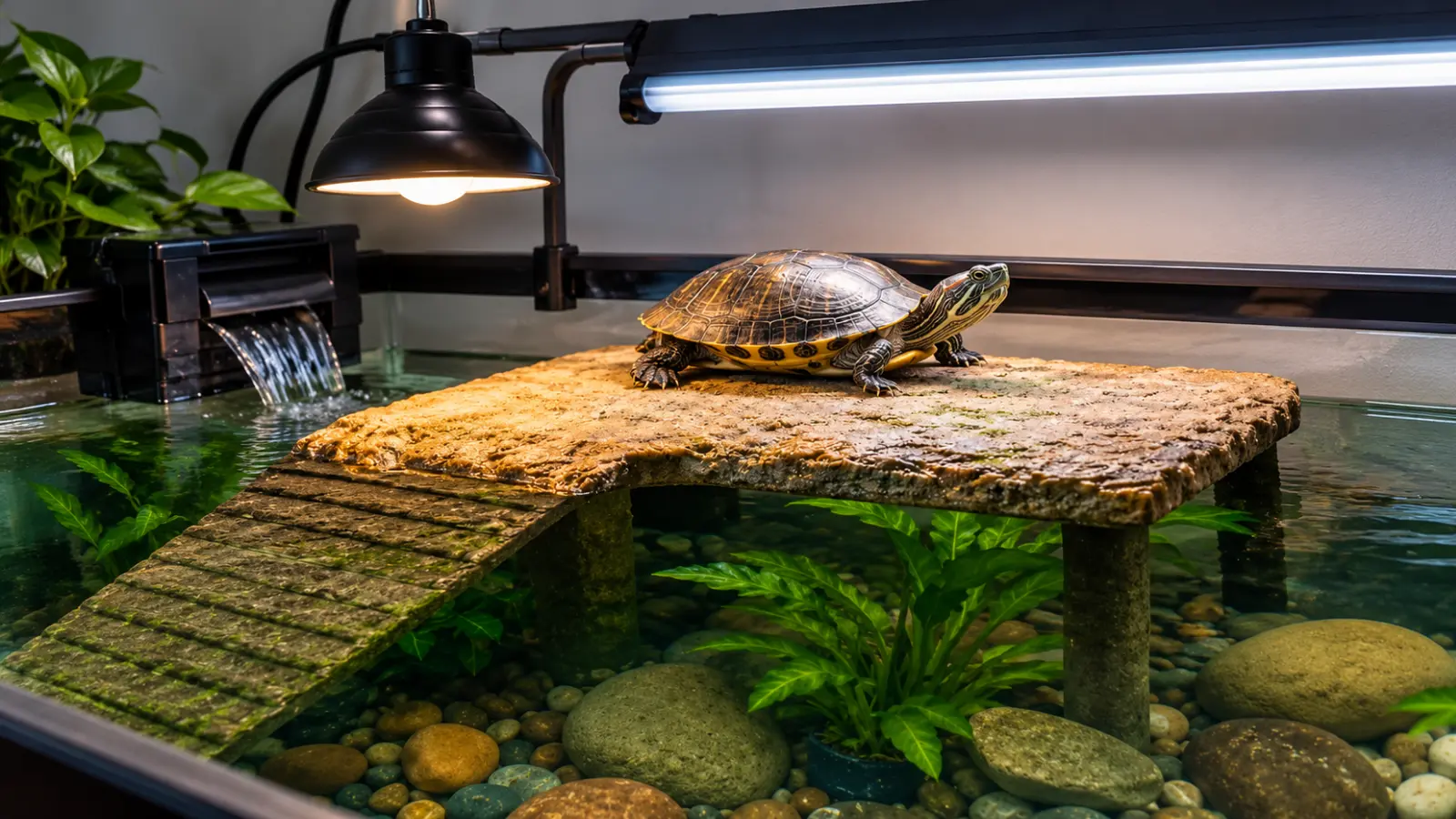
Turtles cannot warm themselves from the inside, so the habitat has to offer a temperature gradient: warm water, a warmer basking spot, and a cooler area to retreat to. The basking spot also carries the UVB lamp, which lets the turtle make vitamin D3 and use dietary calcium. Without enough UVB, turtles can develop metabolic bone disease.
| Setting | Commonly cited starting point | What can change it |
|---|---|---|
| Basking area air temperature | About 85 to 90°F | Species, lamp type, enclosure size, room temperature |
| Water temperature | About 75 to 80°F for adults; warmer for hatchlings | Age and species; published ranges vary by source |
| UVB light | Reptile UVB lamp over the basking spot, with nothing between lamp and turtle | Bulb type, distance, and the manufacturer’s output guidance |
| UVB bulb replacement | Often about every 6 months | Some bulb types lose output sooner or last longer, so follow the label |
Three details cause most lighting mistakes. First, UVB does not pass through glass or plastic, so a lamp shining through a tank lid of either material does little. Second, a UVB bulb can keep glowing after its UVB output has faded, so do not judge it by brightness. Third, thermometers beat guesswork: use a water thermometer and an infrared temperature gun to check the water and the basking spot, and run the lamps on a timer so the day-night cycle stays steady.
Do not copy bulb wattage or lamp distance from a video or a product review. The right numbers depend on the lamp and the enclosure, and a wrong setup can be ineffective or unsafe. Confirm your plan with a reptile veterinarian.
Water Quality and Cleaning
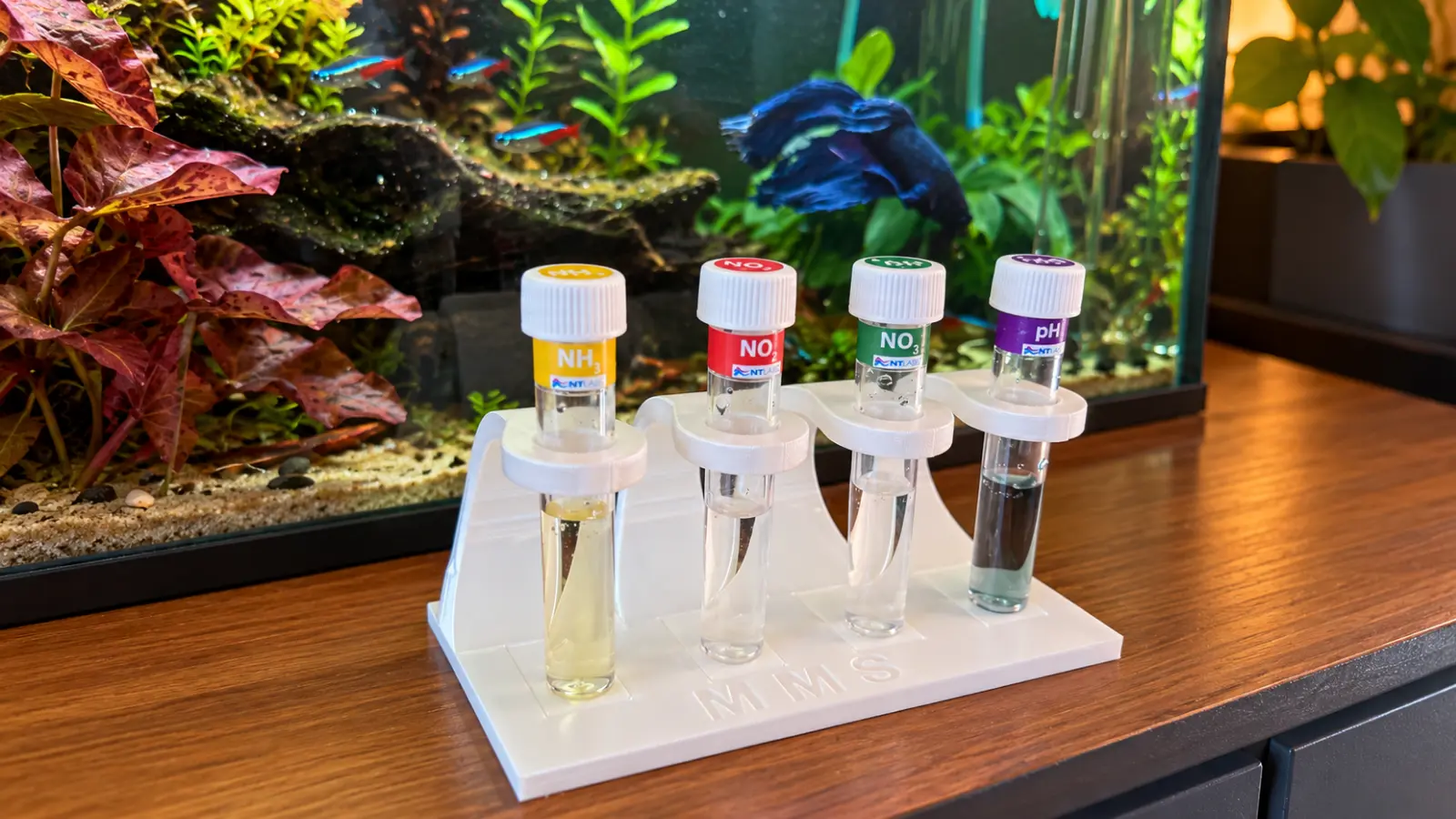
Clear water is not clean water. Aquatic turtles eat, drink, and pass waste in the same water, so filtration and regular partial water changes are part of daily care. One veterinary hospital guide recommends a partial water change weekly and a full change monthly. Another veterinary resource notes that many owners change about half the water weekly. The right schedule depends on the filter, the water volume, how much the turtle eats, and the turtle’s size, so use these as starting points and adjust.
Feeding the turtle in a separate container of water keeps the main tank cleaner, and it is a simple habit that cuts down on water changes. Do not rely on an aquarium routine built for fish, because turtle tanks get dirty far faster.
Cleaning also has a health side. Keep turtle equipment out of the kitchen, and clean tanks, filters, and décor outdoors or in a non-kitchen area when you can. If you must clean indoors, disinfect the area afterward and wash your hands with soap and water when you finish.
Diet Must Match the Species and Life Stage
For common aquatic sliders, a balanced diet should include high-quality commercial turtle pellets, appropriate leafy greens, aquatic plants, and species-suitable sources of animal protein. Young sliders generally require more animal protein, while adults become increasingly herbivorous and should receive a greater proportion of plant matter. Some veterinary care guidelines recommend that vegetables and other suitable plants make up at least half of an adult slider’s diet, with commercial pellets and animal protein offered in controlled amounts. Exact proportions vary by species, age, body condition, and veterinary recommendations, so avoid applying a single feeding ratio to every turtle.
Feeding frequency changes with age. The same guide suggests daily feeding for young aquatic turtles and every other day for adults, and turtles eat in the water. Because turtles are messy eaters, offer only what the turtle finishes and remove leftovers.
Skip the shortcuts. Copying a food list from a different species, adding supplements without veterinary guidance, or feeding mostly meat or lettuce can leave a turtle short on calcium or vitamins. Land-dwelling turtles and tortoises have very different diets, so check your species guide before using any ratio from this page.
Hygiene and Salmonella Safety
Turtles of any size can carry Salmonella in their droppings even when they look healthy and clean. The germs spread to the turtle’s body, its tank water, and everything in its area. Hygiene is part of the care routine, not an extra.
- Wash hands with soap and water after touching, feeding, or caring for the turtle or anything in its habitat, and help young children wash properly
- Do not kiss or snuggle a turtle, and do not eat or drink while handling one
- Keep turtles and their equipment out of kitchens and food-preparation, storage, and eating areas
- Do not let a turtle roam freely through the home
The CDC says pet turtles are not recommended for children younger than 5, adults 65 or older, or people with weakened immune systems, because these groups are more likely to become seriously ill. Make that decision before adoption, not after the habitat is built.
Safety Note
CDC is investigating a multistate Salmonella outbreak linked to pet turtles. As of its September 18, 2026 update, it reported 20 illnesses in 12 states, with half of the sick people younger than 5. Most of those who reported the turtle’s size had a shell shorter than 4 inches. CDC repeats its advice: do not buy turtles with shells under 4 inches, and check its outbreak page for the latest numbers.
Signs to Watch and When to Call a Vet
Learn what is normal for your turtle: how it eats, basks, swims, and what its shell and eyes look like. A change is easier to describe to a veterinarian when you know the baseline, and a quick note or photo helps. You do not need to diagnose anything at home.
| What you notice | Possible reasons (not a diagnosis) | Next step |
|---|---|---|
| Misshapen or soft shell, deformed legs | Metabolic bone disease from poor diet, too little UV light, or both | Reptile vet visit; review diet and lighting with them |
| Pitting, ulcers, or soft or foul areas on the shell | Shell infection from bacteria, fungi, or parasites | Reptile vet visit; do not scrape or treat it yourself |
| Swollen or closed eyes | Several causes, including vitamin A deficiency, infection, or irritation | Reptile vet visit; swollen eyes can look alike across causes |
| Nasal discharge, bubbles, or tilting while floating | Respiratory infection, including pneumonia | Call promptly, since breathing problems can worsen |
| Not eating, not basking, or unusually inactive | Habitat problems such as wrong temperatures, or illness | Check temperatures and water first, then call if it persists |
Do not try to fix a health problem by changing lights, diet, water chemistry, or supplements on your own. Find a reptile-experienced veterinary practice before there is an emergency, because a general clinic may not treat turtles and after-hours clinics often do not either. This article provides general pet-care information and is not a substitute for veterinary diagnosis or treatment.
Before the Turtle Comes Home
Set up and test the habitat first, so you can fix problems before a living animal depends on it. Use this list as a final check.
- You know the exact species and its adult size, and the habitat will fit the adult
- The tank, filter, heater, basking platform, heat lamp, UVB lamp, and thermometers are running and have been tested for several days
- The lid is secure, cords are protected, and the setup is away from food-preparation areas
- The turtle’s shell is longer than 4 inches and the seller is legal and can identify the species
- No child under 5, adult 65 or older, or person with a weakened immune system will handle the turtle
- You have a reptile veterinarian, a plan for after-hours care, and someone who can feed the turtle when you travel
Build a Healthy Habitat and a Consistent Care Routine
Caring for a pet turtle requires more than a tank of water and occasional feeding. For aquatic species, a spacious swimming area, reliable filtration, appropriate temperatures, UVB lighting, a dry basking platform, and a balanced diet all contribute to long-term health. Understanding your turtle’s species-specific needs is the foundation for creating an environment where it can live safely and comfortably.
Before bringing a turtle home, prepare and test its habitat, plan for its adult size and lifespan, and identify a veterinarian experienced with reptiles. Once your turtle is settled, monitor water conditions, equipment, appetite, swimming, basking behavior, and shell appearance regularly. Consistent care, good hygiene, and timely veterinary attention are essential to responsible turtle ownership.
Frequently Asked Questions
How big of a tank does a pet turtle need?
Tank size depends on the turtle’s species and adult shell length. For common aquatic turtles such as red-eared sliders, a widely used starting guideline is at least 10 gallons of water per inch of shell length, meaning a 10-inch turtle may need 100 gallons or more. The habitat also needs sufficient swimming depth, strong filtration, a completely dry basking area, and secure walls. Other turtle species may require different arrangements.
Do pet turtles need UVB light and a heat lamp?
Most aquatic pet turtles need both appropriate UVB lighting and a heated basking area. UVB helps turtles produce vitamin D3 and absorb calcium, while external heat supports digestion, activity, and normal body functions. Sunlight passing through window glass does not provide adequate UVB. Use reptile-appropriate equipment, monitor temperatures, and follow the lamp manufacturer’s placement and replacement instructions for your turtle’s species.
How often should you clean a turtle tank?
Aquatic turtles produce substantial waste, so their tanks need effective filtration, regular water-quality monitoring, and partial water changes. Weekly partial changes are a common starting point, but the appropriate frequency depends on tank size, filtration, feeding, and measured water conditions. Remove leftover food and debris promptly, and never assume clear water is necessarily safe. Clean tank equipment away from food-preparation areas and wash your hands afterward.
What should you feed a pet turtle?
A pet turtle’s diet depends on its species and age. Common aquatic sliders are omnivores, with juveniles generally requiring more animal protein and adults eating a greater proportion of plant material. A suitable commercial aquatic turtle pellet can form an important part of the diet, alongside appropriate vegetables and other species-specific foods. Avoid feeding mostly meat or lettuce, and consult a reptile veterinarian about portions, calcium needs, and feeding frequency.
Can pet turtles carry Salmonella even if they look healthy?
Yes. Turtles of any size can carry Salmonella bacteria without appearing sick, and the germs can contaminate tank water, equipment, and surrounding surfaces. Wash your hands with soap and water after handling turtles or their habitats, and keep them away from kitchens and food-preparation areas. The CDC does not recommend pet turtles for households with children younger than five, adults 65 or older, or people with weakened immune systems.
How can you tell if a pet turtle is sick?
Watch for changes in appetite, swimming, basking, activity, shell condition, or eye appearance. Warning signs include swollen eyes, a soft or damaged shell, nasal discharge, unusual floating or tilting, and persistent lethargy. Contact a reptile-experienced veterinarian promptly if these changes occur, especially if your turtle has difficulty breathing or cannot swim normally. Do not attempt to treat suspected infections or nutritional problems with home remedies.