
Learning how to take care of a snake starts with understanding the needs of the species you plan to keep. Pet snakes require a secure, appropriately sized enclosure, carefully controlled temperatures and humidity, suitable hiding places, fresh water, and a species-appropriate feeding routine. They also need careful handling, regular observation, and access to a veterinarian experienced with reptiles.
Although snakes are often described as low-maintenance pets, their health depends heavily on the conditions inside their enclosure. A corn snake, ball python, and boa constrictor can have very different requirements for space, heating, humidity, feeding, and long-term care. Choosing the right species and preparing its habitat before bringing it home are essential steps toward responsible ownership.
This guide explains the foundations of pet snake care, including enclosure safety, heating and humidity control, feeding, handling, shedding, and cleaning. You’ll also learn how to reduce Salmonella exposure, recognize potential health problems, and prepare a safe home for your snake. Exact temperatures, enclosure dimensions, and feeding schedules should always be based on the species and reliable veterinary guidance.
Choose a Species Only After Research
Adult size, lifespan, temperament, humidity needs, and diet vary widely across pet snakes, so pick the species before you buy equipment. The table shows how different three commonly kept snakes can be. It is a starting map, not a care plan.
| Snake | Adult size and lifespan | What to know before choosing |
|---|---|---|
| Ball python | Around 5 feet; can live up to about 25 years in captivity | Needs reliable heat and humidity, and may refuse food for long stretches |
| Corn snake | Medium-sized; commonly 15 to 20 years, sometimes longer | An active climber and escape artist; humidity advice varies by source |
| Boa constrictor | At least 6.5 to 10 feet; 20 to 30 years in captivity | A large, powerful animal that raises space, cost, and safety questions |
“Beginner-friendly” never means maintenance-free. Choose only after you can meet the adult animal’s space, cost, feeding, and veterinary needs for its whole life, and do not pick a snake by color, price, or small juvenile size. Ask where the snake came from and prefer a source that can name the species and its history.
Check household and legal fit as well. Some species are restricted by state or local rules, and the CDC does not recommend reptiles for children under 5, adults 65 or older, or people with weakened immune systems. Decide that before you buy, not after the enclosure is built. Venomous snakes are outside the scope of this guide.
Build an Escape-Proof Enclosure
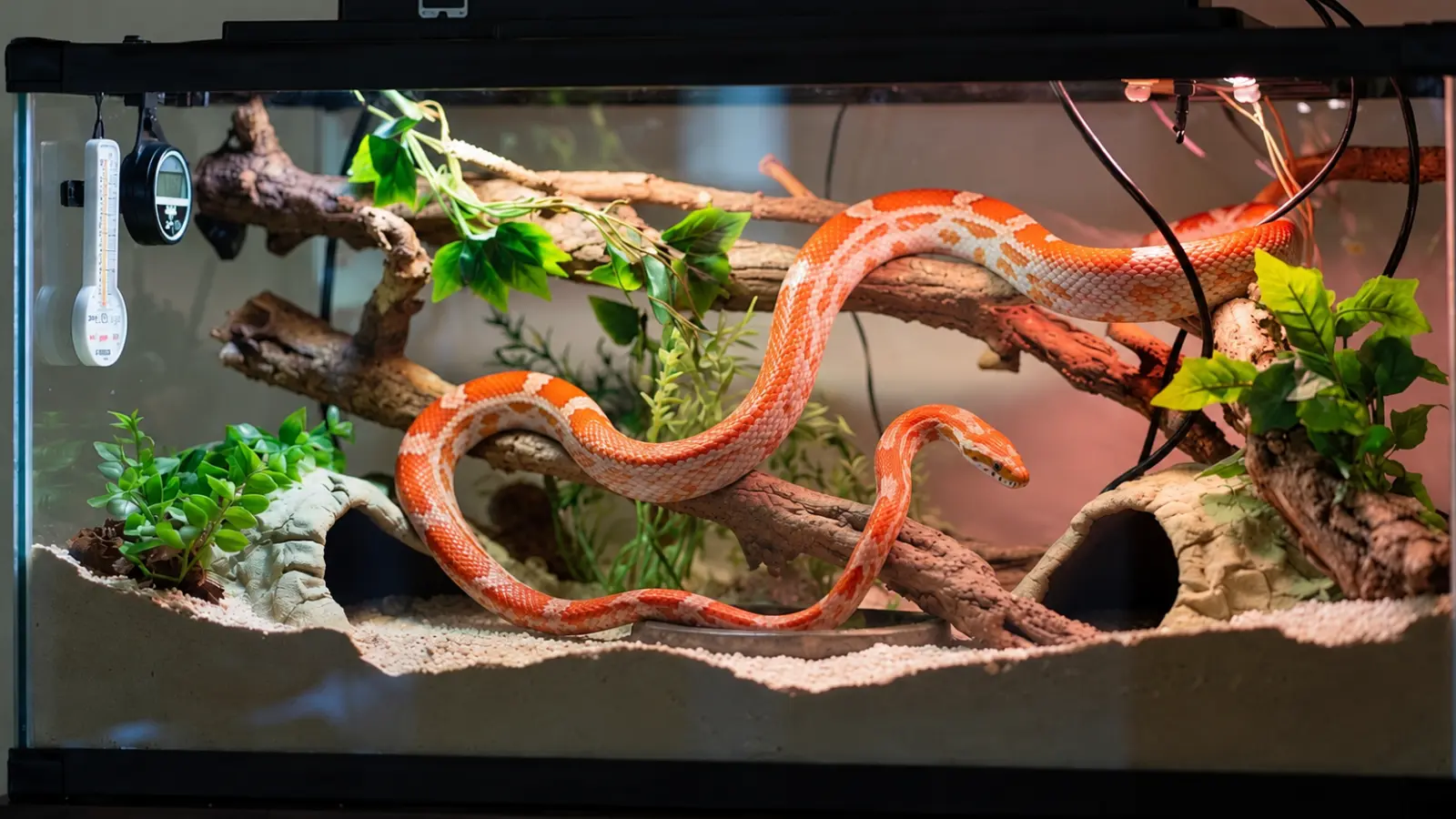
An enclosure should be as large as you can reasonably provide, long enough to build a temperature gradient from a warm end to a cool end, and secured before the snake arrives. Veterinary care sheets stress that snakes are escape artists that can squeeze out of very small openings, so security protects the snake, the household, and neighbors.
| Need | What good looks like | Common mistake |
|---|---|---|
| Space | Room to stretch and move, with a gradient along its length | Buying for the juvenile, then keeping the adult in the starter size |
| Security | Locking or clipped lids and doors; sealed cable and vent gaps | Trusting a lid that merely sits on top |
| Hides | A secure hide big enough to fit in, ideally on both the warm and cool sides | One hide in the middle, which forces a choice between warmth and cover |
| Water | A sturdy dish the snake can fit in, kept clean | A tiny bowl that tips over or gets contaminated quickly |
| Substrate | Easy to spot-clean, such as newspaper, or a commercial substrate suited to the species | Loose material that sticks to prey and gets swallowed at feeding |
Check every possible exit after feeding, cleaning, or handling, including lids, latches, vents, cable ports, and gaps around equipment. Make the check a habit, because most escapes come from a latch that was not fully closed.
Heat, Humidity, Hides, and Substrate
Snakes cannot warm themselves internally, so you control their body temperature through the enclosure. The core rule is a gradient: heat only part of the floor so the snake can move between a warm spot and cooler area. Heating the whole enclosure leaves no way to cool off, and a poorly set heat source is one of the most common causes of burns and illness.
- Avoid hot rocks. Veterinary sources warn they can cause severe burns
- Guard every heat source. Bulbs and heaters should be shielded, because snakes may coil around them and not move
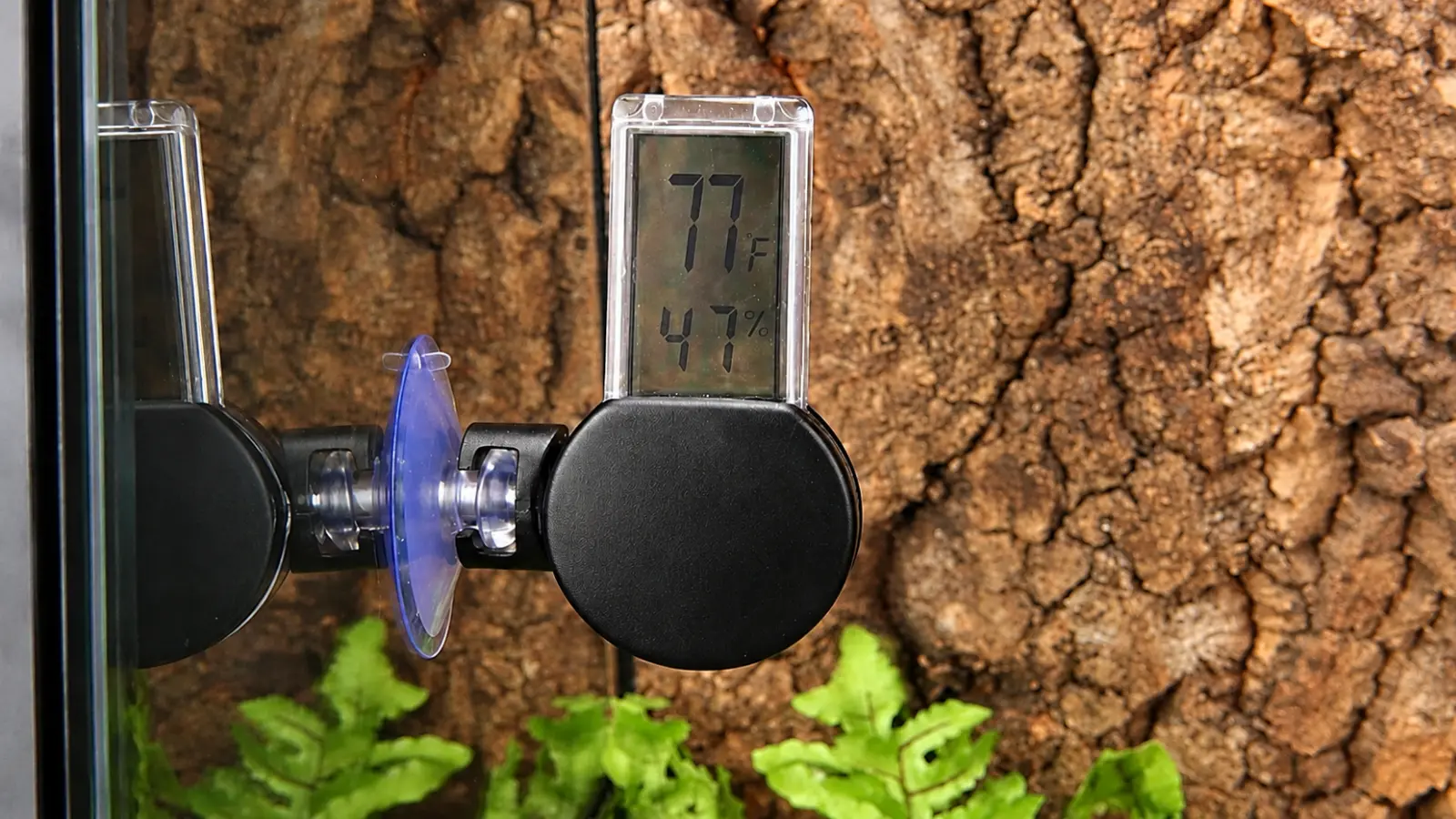
- Measure where the snake lives. Use reliable thermometers, a hygrometer for humidity, and an infrared temperature gun to check the warm spot and the inside of hides
- Use an appropriate thermostat with every heat source, including heat mats, ceramic heat emitters, and heat lamps. Check temperatures regularly with independent thermometers and use protective guards to prevent burns and overheating.
Do not copy exact numbers from a video or a product label. Published targets differ by species and by source. One veterinary sheet cites a basking area of 90 to 97°F for boas and pythons, and corn snake humidity advice ranges from roughly 40 to 50 percent in one guide to 65 to 75 percent in another. That spread is a reason to confirm settings for your exact species with a reptile veterinarian, then monitor them rather than guessing.
Humidity matters beyond comfort. Incorrect temperature or humidity is linked to shedding trouble, respiratory infections, and feeding refusal, which is why measuring beats eyeballing it. A water dish, a humid hide, and a substrate suited to the species all help hold the right level, and the exact method depends on the snake. The Snake Heat & Humidity guide should cover species-by-species settings.
Create a Safe Feeding Routine
Most pet snakes eat whole rodents, and the safest standard is pre-killed, frozen-thawed prey rather than live. Live prey can bite and injure a snake, and veterinary sources advise never leaving a live rodent unattended with a snake. Frozen prey is also easy to buy in bulk and store.
- Thaw fully. A partially frozen item can harm the snake, so thaw it completely and warm it before offering, keeping it dry in a sealed bag
- Size by thickness. Most care sheets match prey to the widest part of the snake’s body, and some allow up to about 1.5 times that width
- Use feeding tongs. They keep your hand from being mistaken for food
- Remove uneaten prey. Take it out the same day
Feeding frequency depends on species, age, and size, so there is no universal schedule. Sheets for ball pythons, for example, cite roughly weekly feeding for hatchlings and every 10 to 14 days for some adults, and other snakes differ. Young snakes eat more often than adults, and prey size rises as the snake grows.
Skip handling for 24 to 48 hours after a meal, since moving a snake too soon can cause it to regurgitate. Regurgitation can also point to temperatures that are too low. Ball pythons are known to go off food, sometimes for months, but see a reptile veterinarian if the snake is losing weight or condition. Do not force-feed or medicate a snake based on internet advice.
Handling and Shedding Basics
Handle a snake gently and not too much. Veterinary sources note that snakes bruise easily and that rough handling can cause serious injury, so support the whole body and keep sessions calm. Give a new snake time to settle before handling it, and do not force handling on a snake that is stressed, newly arrived, shedding, or unwell. Stress also increases Salmonella shedding, a good reason to go slowly.
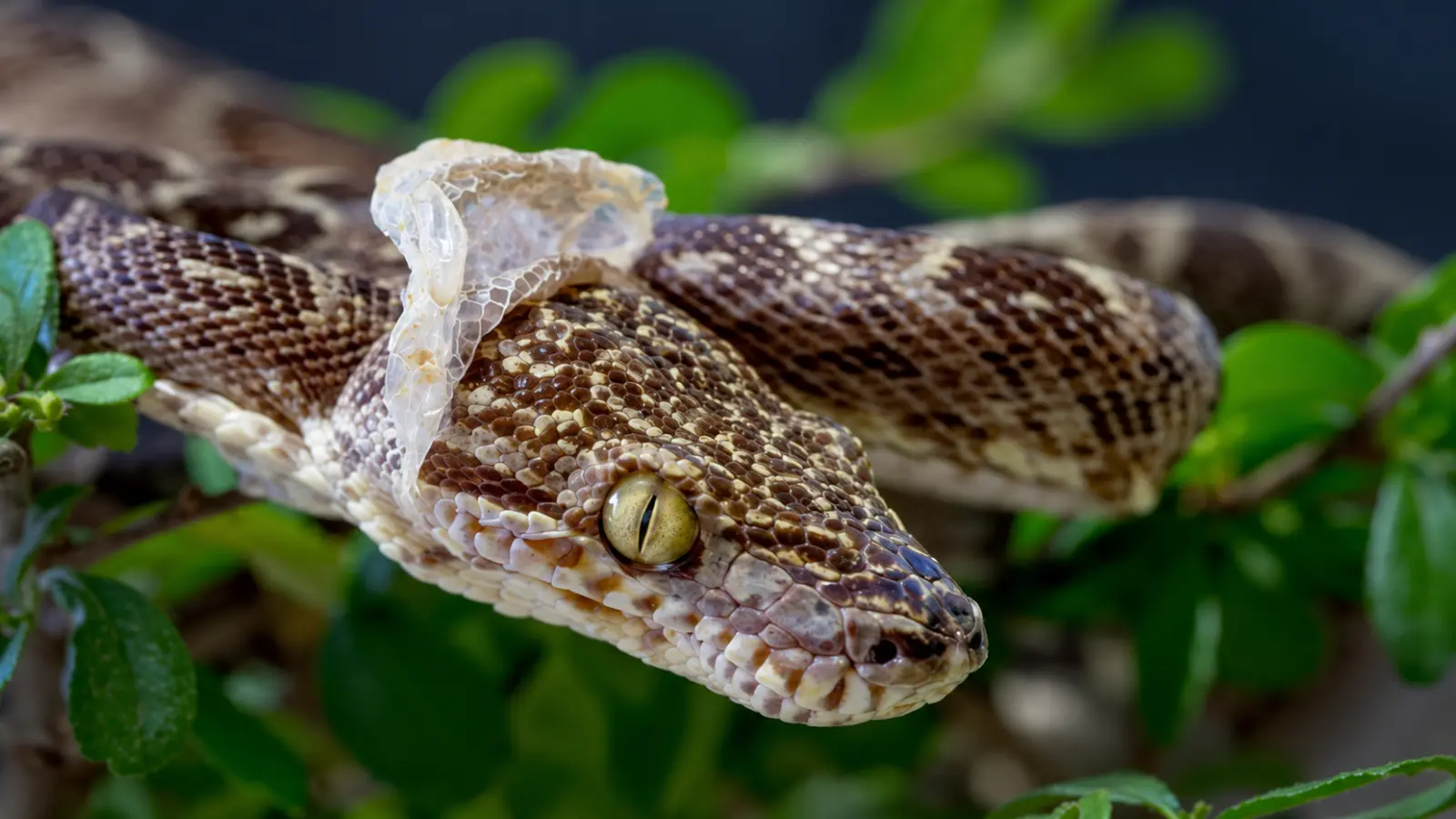
Shedding is normal, and good husbandry supports a clean shed. Humidity that is too low is a common reason a shed goes wrong. If skin or an eye cap stays on, or if shedding problems repeat, ask a reptile veterinarian for guidance instead of pulling skin off or improvising treatments. A dedicated Snake Shedding guide should explain what a normal shed looks like for each species.
Cleaning, Quarantine, and Salmonella Safety
Spot-clean waste and spills promptly, and do a deeper clean on the schedule your species and substrate require. Quarantine any new reptile away from your other animals, with separate equipment and a plan from a reptile veterinarian. The length and testing depend on the animals and the vet’s advice, so do not copy a generic number of weeks.
Reptiles can carry Salmonella even when they look healthy and clean, and the germs spread through droppings to the snake’s body, its enclosure, and anything nearby. The CDC adds that feeder rodents, live or frozen, can carry Salmonella too, and that freezing does not make them safe.
- Wash hands with soap and water right after handling the snake, its enclosure, or live or frozen feeder rodents
- Do not clean enclosures or wash dishes in the kitchen sink, and do not use kitchen utensils to handle feeder rodents
- Thaw and store feeder rodents away from human food, in a sealed container
- Do not kiss or snuggle a snake, and do not eat or drink while handling one
- Do not let the snake roam the home, and supervise any child’s handwashing
The CDC recommends keeping reptiles out of homes with children under 5 and away from households with weakened immune systems. Health should weigh in your decision before the snake arrives.
Signs to Watch and When to Call a Vet
Learn your snake’s normal: its activity pattern, posture, appetite, shedding, and droppings, plus the temperatures and humidity you maintain. Notes and photos make a change easier to describe. You do not need to diagnose anything yourself.
| What you notice | Possible reasons (not a diagnosis) | Next step |
|---|---|---|
| Open-mouth breathing, wheezing, or bubbles at the nose or mouth | Respiratory infection, often tied to wrong temperature or humidity | Call a reptile vet promptly |
| Burns or blisters on the belly | Contact with an unguarded or overheated heat source | Vet visit; fix the heat source right away |
| Stuck shed or retained eye caps | Humidity problems or underlying illness | Ask a vet; do not pull skin off |
| Repeated regurgitation | Temperatures too low, handling too soon after a meal, or illness | Check temperatures, stop handling after meals, and call a vet if it repeats |
| Weight loss, weakness, or long refusal to eat | Normal fasting in some species, husbandry problems, or illness | Check the setup, then call a vet if the snake is losing condition |
Do not try to treat a suspected illness by changing temperature, humidity, supplements, or medication yourself. Find a reptile-experienced veterinarian before an emergency, because not every clinic treats snakes. If the snake escapes and may have reached household hazards such as cleaners, heaters, or cords, call a vet. This article provides general pet-care information and is not a substitute for veterinary diagnosis or treatment.
Before the Snake Comes Home
Set up and run the enclosure for a few days first so you can fix problems before a living animal depends on it.
- You know the exact species, its adult size, and its lifespan
- The enclosure locks, and every vent, cable port, and lid gap is closed
- Thermometers, a hygrometer, a thermostat, and guarded heat sources are installed and tested
- There are hides on both sides, a water dish, and a spot-clean-friendly substrate
- You have a plan for frozen-thawed prey, tongs, and separate storage away from human food
- No child under 5, adult 65 or older, or person with a weakened immune system will handle the snake
- You have a reptile veterinarian, an after-hours plan, and someone to feed the snake when you travel
Continue With the Right Snake Guide
Once you know your species, move to the guides that carry exact numbers and decisions: Snake Species Guide for choosing and identifying a snake, Snake Enclosure Setup for sizing and layout, Snake Heat & Humidity for species-specific settings, Snake Feeding for prey and schedules, and Snake Shedding for what is normal and what is not.
For the bigger picture of responsible ownership, see Pet Care Advice. Once your snake’s verified needs are clear, use Pet Care Schedule to organize recurring tasks, and read Pet Safety at Home to prepare your household.
Build a Safe Habitat and a Reliable Care Routine for Your Snake
Taking good care of a pet snake begins with understanding its species-specific needs and providing an environment that supports its natural behavior. A secure enclosure, suitable heating and humidity, appropriate hiding places, clean water, and a carefully planned feeding routine all contribute to its health and well-being. Consistent observation and gentle, appropriate handling are just as important as choosing the right equipment.
Before bringing a snake home, make sure its enclosure is fully prepared, its environmental conditions are stable, and you have access to a reptile-experienced veterinarian. As your snake grows, continue reviewing its space, feeding routine, shedding, activity, and overall condition. Responsible snake ownership is a long-term commitment built on accurate husbandry, safe handling, and timely veterinary attention.
Frequently Asked Questions
Are pet snakes easy to take care of?
Some snake species can be manageable for prepared beginners, but no snake is maintenance-free. Every pet snake needs a secure enclosure, species-appropriate heating and humidity, suitable food, regular cleaning, and access to a reptile veterinarian. Ball pythons and corn snakes are commonly kept as pets, but their environmental and feeding needs differ. Research the animal’s adult size, lifespan, and care requirements before choosing one.
What does a pet snake need in its enclosure?
A pet snake needs an escape-proof enclosure large enough to move, stretch, and regulate its body temperature. Provide a warm area and a cooler retreat, secure hiding places, appropriate substrate, clean water, and species-specific environmental enrichment. Use reliable thermometers, a hygrometer, and thermostatically controlled heating equipment. Check lids, locks, vents, and cable openings regularly because snakes can escape through surprisingly small gaps.
What temperature and humidity does a pet snake need?
Temperature and humidity requirements depend on the snake’s species, age, and natural habitat. Most commonly kept snakes need a temperature gradient that allows them to move between warmer and cooler areas, while humidity must support normal hydration and shedding. Measure conditions with reliable thermometers and a hygrometer rather than estimating by touch. Avoid unregulated heaters and hot rocks, which can cause serious burns.
How often should you feed a pet snake?
Feeding frequency depends on the species, age, body condition, and size of the prey. Young snakes generally eat more frequently than adults, and many commonly kept species can be fed appropriately sized, fully thawed prey rodents. Frozen-thawed prey is generally safer than live rodents, which can injure snakes. Follow a species-specific feeding plan, remove uneaten prey promptly, and consult a reptile veterinarian about persistent feeding refusal or weight loss.
How often should you handle a pet snake?
Handling frequency depends on the snake’s species, temperament, health, and adjustment to its environment. Begin with brief, gentle sessions once a new snake has settled in, supporting its body without restraining it unnecessarily. Avoid handling during stressful periods, when the snake is unwell, or for approximately 24 to 48 hours after feeding. Wash your hands afterward because healthy snakes can carry Salmonella bacteria.
How can you tell if a pet snake is sick?
Watch for unusual breathing, nasal discharge, persistent feeding refusal, weight loss, abnormal posture, skin injuries, or repeated shedding problems. Open-mouth breathing, wheezing, burns, and significant weakness warrant prompt veterinary attention. A retained eye cap or stuck shed should also be assessed rather than forcibly removed. Contact a reptile-experienced veterinarian when concerning changes occur, and avoid attempting home treatments without professional guidance.